65 lb
About 176 gsmThe lightest weight anyone recommended. One maker uses it for every shadow box and makes a lot of them.
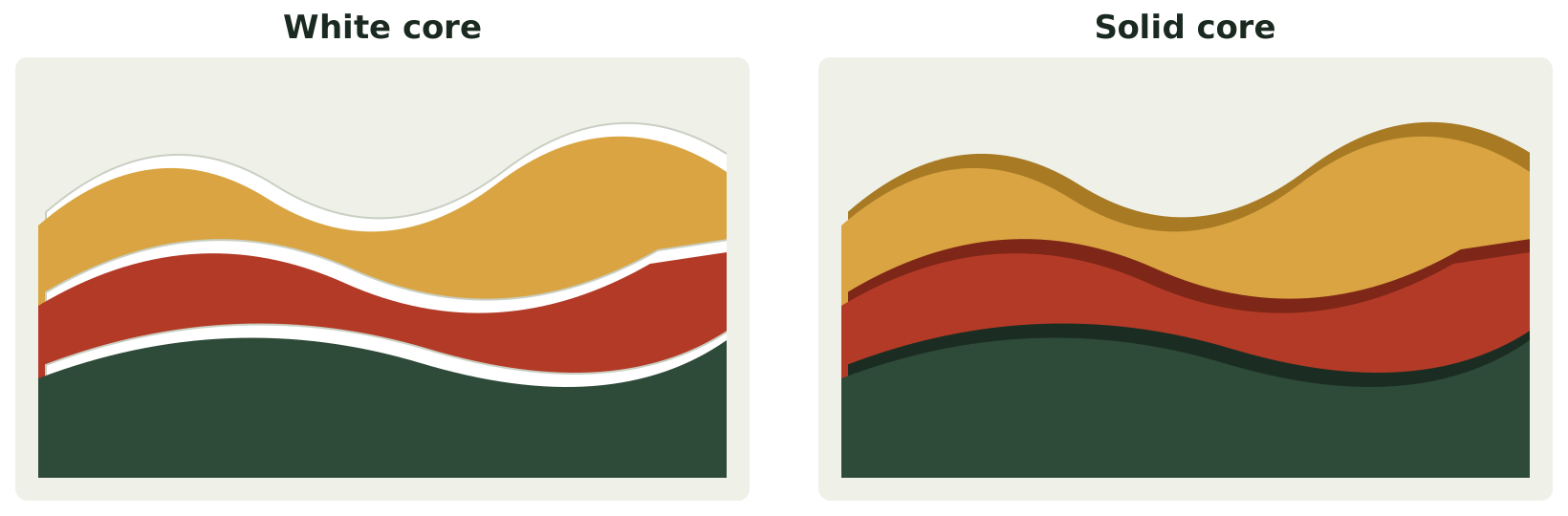
Most layered shadow box makers cut solid-core cardstock between 65 and 100 lb, and 80 lb is the most common choice. Encore cardstock from 12x12 Cardstock Shop was recommended most often, followed by American Crafts Textured and Recollections from Michaels. Choose solid core so the cut edges do not show white.
We asked people who make layered paper shadow boxes where they buy their paper, which brands they trust, and what they use for shimmer and backlit pieces. One of them has cut nearly every day for six years. This page collects what they told us.
The lightest weight anyone recommended. One maker uses it for every shadow box and makes a lot of them.
The weight most people reach for. Stiff enough to hold its shape and still easy to cut.
For pieces that need extra structure, such as large layers with big openings.
Heavier paper also saves work when you assemble. With thin paper, each layer needs more foam tape to keep it flat and spaced. Pound ratings vary between brands, so compare the gsm when it is printed on the pack. The material guide explains why the two numbers do not always match.
Solid-core cardstock is colored all the way through. White-core cardstock is only colored on the surface, so every cut edge shows a thin white line. In a shadow box you see those edges at an angle, layer after layer, which is why makers avoid white core.
Recommended most often. The six-year daily cutter called it the most consistent paper to cut, and others agreed. The range has many colors, which helps when neighboring layers need close shades.
Good quality and suited to cutting machines. The texture adds another dimension to each layer, which shows under side lighting.
A good everyday option with a wide choice of solid-core 80 lb colors. Check the label, because some Recollections lines are white core.
Makers shared pieces cut from shimmer white, vellum, glitter and holographic cardstock, and some mix several textures in one box. These papers behave differently with light:
Translucent, so light passes through it. Use it for a glowing sky, a window or a moon in front of a light source.
Reflect light from the front. They catch the eye on a single layer, such as snow, water or a focal shape.
The strongest effect, best kept to small areas. Thick glitter card may need a deeper blade or a different machine setting.
Combining smooth and textured cardstock in one box makes layers of the same color look different.
Do a test cut before cutting a full project on any specialty paper. If you want patterns that are not sold as cardstock, you can also print your own designs on smooth printable card.
To know how many sheets and which colors to buy, open your design in the KerfPress generator. The download includes an assembly guide that lists every layer with its paper color, so you can match each one to the cardstock you have.
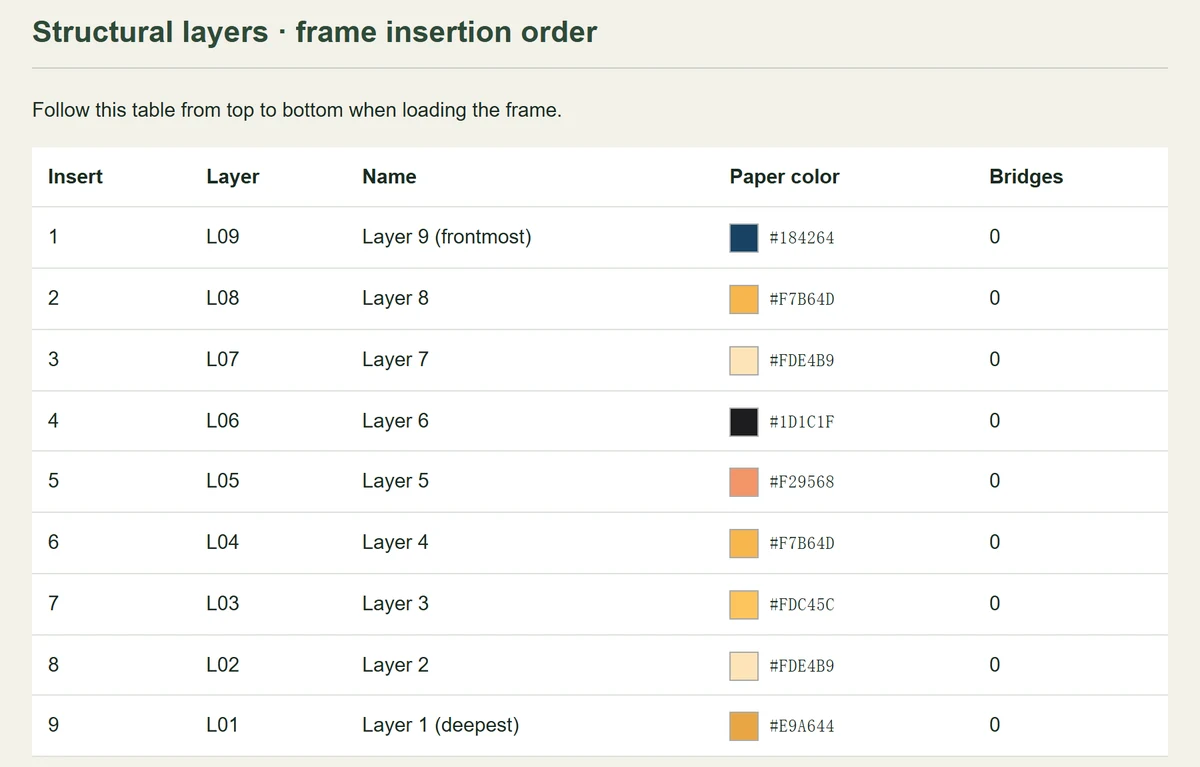
Most makers use 80 lb cardstock, about 216 gsm. 65 lb works and is easier to cut, and 100 lb or heavier adds structure when a piece needs it.
White-core cardstock shows a white line on every cut edge, and in a shadow box those edges are visible from the side. Solid-core cardstock is colored all the way through, so the edges match the surface.
Vellum lets light through, so it glows when a light sits behind it. Shimmer, metallic, glitter and holographic cardstock reflect light from the front instead, and work best on a single layer or a small area.